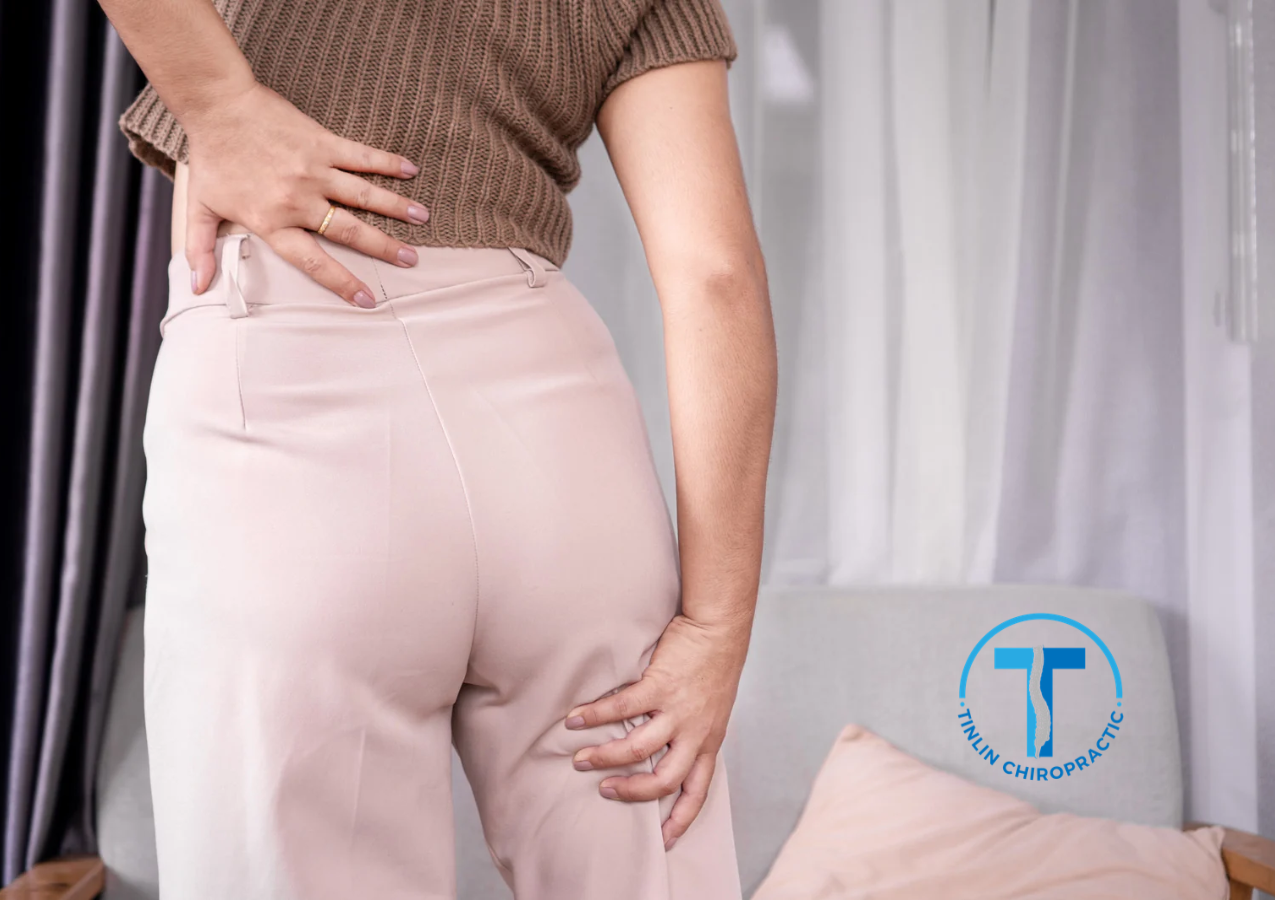
Quick answer: General back pain typically stays localized to the lower back and feels like stiffness, dull aching, or muscle soreness. Sciatica, by contrast, radiates from the lower back or buttock down one leg, often accompanied by numbness, tingling, or a burning sensation caused by irritation of the sciatic nerve.
Back pain is one of the most common reasons people visit a doctor, but not all back pain is the same. Some aches stay put in the lower back, while others shoot down the leg and make it hard to sit, stand, or sleep comfortably. Knowing the difference matters because sciatica and general back pain often respond to different treatments.
If you live in the Louisville area and you’re trying to figure out whether your discomfort is run-of-the-mill back pain or something more specific like sciatica, this guide breaks down the key differences, common causes, and what to do next.
What Is General Back Pain?
General back pain refers to discomfort that originates in the muscles, ligaments, joints, or discs of the spine, without involving nerve compression. It’s often described as a dull ache, stiffness, or soreness concentrated in the lower back.
Common symptoms include:
- Stiffness that worsens after sitting or standing for long periods
- Muscle tightness or spasms
- Pain that improves with rest or gentle movement
- Discomfort that stays localized to the back, without radiating elsewhere
General back pain is usually mechanical in nature, meaning it’s tied to posture, overuse, or minor strain rather than nerve involvement.
What Is Sciatica?
Sciatica occurs when the sciatic nerve, the longest nerve in the body, becomes compressed or irritated. This nerve runs from the lower back through the hips and buttocks, then down each leg. When it’s affected, pain doesn’t stay confined to the back.
Common symptoms of sciatica include:
- Sharp, shooting pain that radiates from the lower back or buttock down one leg
- Numbness or tingling in the leg or foot
- A burning or electric sensation along the nerve pathway
- Weakness in the affected leg or foot
- Pain that worsens when sitting, coughing, or sneezing
Sciatica is typically a symptom of an underlying issue, such as a herniated disc or spinal stenosis, rather than a standalone condition.
What Are the Key Differences Between Sciatica and General Back Pain?
The clearest distinction between sciatica and general back pain is location. General back pain stays in the lower back. Sciatica travels, extending through the buttock and down the leg, sometimes reaching the foot.
Here’s a closer comparison:
Location of pain
General back pain stays confined to the lower back. Sciatica radiates from the lower back or buttock down one leg.
Type of sensation
General back pain feels like aching, stiffness, or soreness. Sciatica often feels sharp, burning, or electric, and may include numbness or tingling.
One-sided vs. two-sided
General back pain can affect both sides of the lower back. Sciatica almost always affects only one side of the body.
Effect of movement
General back pain often improves with gentle movement or stretching. Sciatica can worsen with sitting, bending, or sudden movements like coughing.
Underlying cause
General back pain usually stems from muscle strain or joint irritation. Sciatica results from nerve compression, often linked to a structural issue in the spine.
Choose to treat your symptoms as sciatica if the pain extends below your hip and includes numbness or tingling. Choose to treat your symptoms as general back pain if discomfort stays in the lower back and responds well to rest or stretching.
What Causes General Back Pain and Sciatica?
Common Causes of General Back Pain
- Muscle strain from lifting, twisting, or poor posture
- Prolonged sitting, especially at a desk
- Weak core muscles that fail to support the spine
- Minor joint irritation from everyday activity
- Stress-related muscle tension
Common Causes of Sciatica
- Herniated or bulging discs pressing on the sciatic nerve
- Spinal stenosis, a narrowing of the spinal canal
- Degenerative disc disease
- Piriformis syndrome, where a muscle in the buttock irritates the sciatic nerve
- Spondylolisthesis, a condition where one vertebra slips forward over another
Both conditions can be aggravated by sedentary lifestyles, poor posture, and lack of core strength, which is why so many people in desk-based jobs around Louisville experience one or both at some point.
When Should You See a Chiropractor for Back or Leg Pain?
Not every ache requires professional care, but certain signs suggest it’s time to schedule an appointment. Consider seeing a chiropractor if you experience:
- Pain that lasts longer than a few days despite rest
- Numbness, tingling, or weakness in your leg or foot
- Pain that interferes with daily activities, work, or sleep
- Symptoms that worsen over time rather than improve
- Back pain following an injury, fall, or car accident
Waiting too long to address sciatica symptoms can allow the underlying issue, such as a herniated disc, to progress. Early evaluation often leads to more effective, less invasive treatment.
How Can Chiropractic Care Help With Sciatica and Back Pain?
Chiropractic care addresses the root cause of pain rather than just masking symptoms. At Tinlin Chiropractic, Dr. Tinlin uses a combination of techniques tailored to each patient’s specific condition.
Personalized chiropractic care starts with a thorough assessment to determine whether pain is mechanical or nerve-related. This allows Dr. Tinlin to build a treatment plan suited to your specific symptoms, whether that’s general back pain or sciatica.
Spinal decompression gently stretches the spine to relieve pressure on compressed discs and nerves, a common underlying cause of sciatica. This non-surgical approach can reduce nerve irritation and promote healing.
Class IV K-Laser therapy uses targeted light energy to reduce inflammation and accelerate tissue repair, helping ease both acute and chronic back pain.
High frequency vibration therapy helps relax tight muscles and improve circulation, which supports recovery from general back pain and complements other sciatica treatments.
Choose spinal decompression if your sciatica stems from disc compression. Choose K-Laser therapy if inflammation is a primary driver of your pain. In many cases, Dr. Tinlin combines these approaches for the most effective results.
Get Relief From Back Pain or Sciatica in Louisville
Telling the difference between sciatica and general back pain comes down to paying attention to where your pain travels and what it feels like. Localized aching usually points to general back pain, while pain that radiates down your leg with numbness or tingling suggests sciatica.
Either way, you don’t have to figure it out alone or live with ongoing discomfort. Dr. Tinlin and the team at Tinlin Chiropractic, located at 710 Breckenridge Ln #201, Louisville, KY 40207, offer personalized evaluations to identify the source of your pain and build a treatment plan that fits your needs.
Schedule an appointment with Tinlin Chiropractic today to get an accurate diagnosis and start your path toward lasting relief.
Frequently Asked Questions
How can I tell if my back pain is actually sciatica?
If your pain radiates from your lower back or buttock down one leg, especially with numbness, tingling, or a burning sensation, it’s likely sciatica rather than general back pain.
How long does sciatica usually last?
Sciatica can resolve within a few weeks with proper care, but cases involving disc compression or nerve irritation may take longer without targeted treatment like spinal decompression or chiropractic adjustments.
Is chiropractic care safe for sciatica?
Yes. Chiropractic care, including spinal decompression and K-Laser therapy, is a non-invasive approach that targets the underlying cause of sciatica without surgery or long-term medication use.
What’s the difference between sciatica and a pinched nerve?
Sciatica is a specific type of pinched nerve that affects the sciatic nerve, causing pain that radiates down the leg. Other pinched nerves may cause different patterns of pain depending on their location.
Who is at risk for developing sciatica?
People with sedentary jobs, poor posture, weak core muscles, or existing spinal conditions like herniated discs are more prone to developing sciatica.


