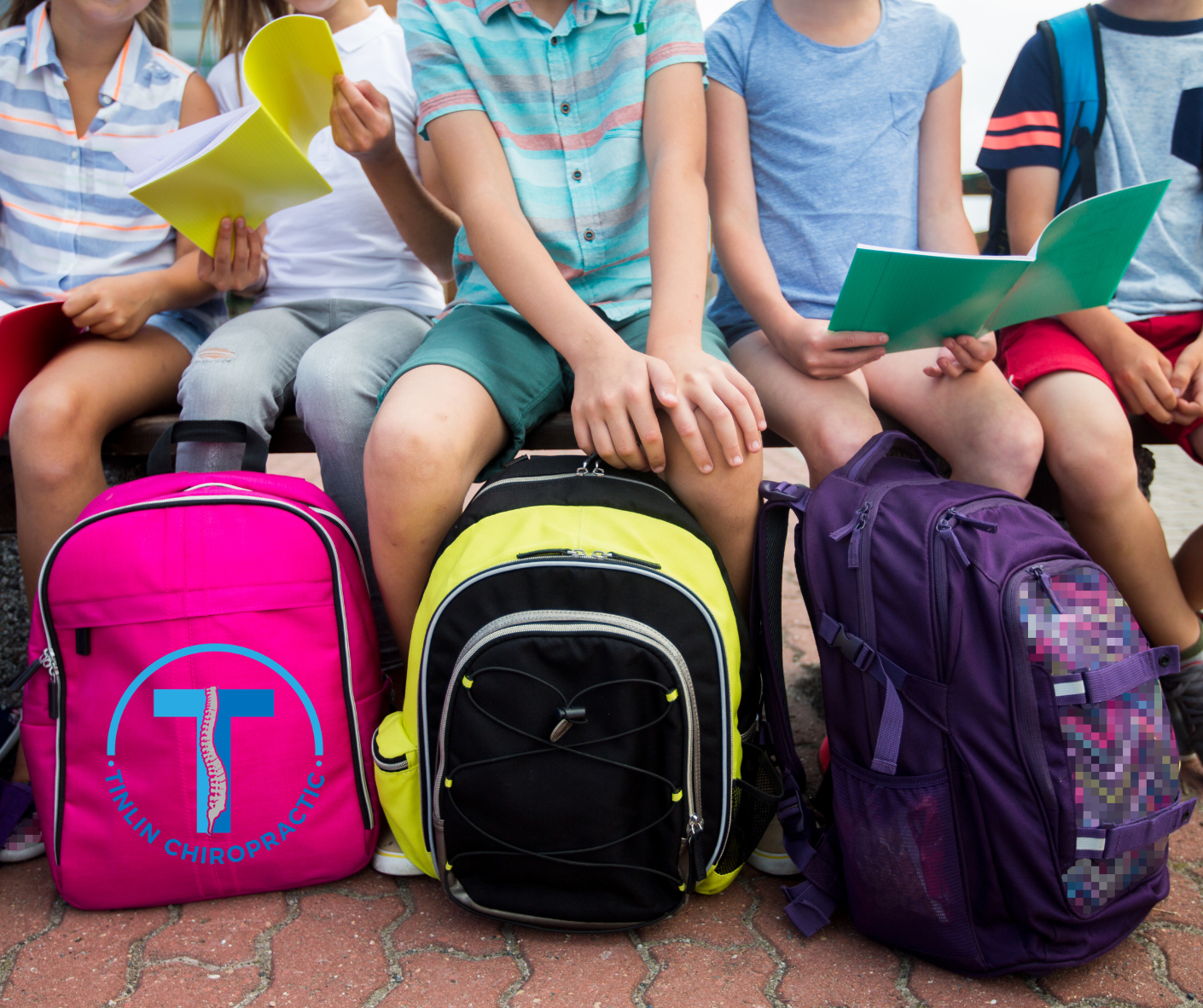
Many students today carry overly heavy backpacks all day instead of using school lockers, placing significant strain on developing spines. Backpacks exceeding 10–15% of a child’s body weight can cause postural changes, muscle fatigue, and long-term spinal problems. Recognizing the warning signs early—and making simple adjustments—can protect your child’s musculoskeletal health.
Walk into most schools today and you’ll notice something: lockers lining the hallways, most of them empty. Students shuffle past them with backpacks so full they lean forward just to stay upright. It’s become the norm—but that doesn’t make it harmless.
The shift away from lockers is real and well-documented. Shorter passing periods, increased homework loads, and the rise of personal devices all contribute to kids hauling more weight on their backs than ever before. For growing spines, the consequences can be significant.
This post breaks down what’s actually happening to your child’s back, what to watch for, and how to address it before a habit becomes a health problem.
How Much Weight Are Kids Actually Carrying?
The American Chiropractic Association recommends that a backpack weigh no more than 10% of a child’s body weight. Some guidelines extend that limit to 15%, though even that upper range can be problematic when carried for hours at a time.
A 70-pound child should ideally carry no more than 7–10 pounds. But studies have found that many students carry backpacks weighing anywhere from 12 to 20 pounds on a daily basis—sometimes more when textbooks, laptops, water bottles, and sports gear are added to the mix. That gap between recommended and actual weight is where the damage begins.
What Heavy Backpacks Do to a Developing Spine
A child’s spine is not a scaled-down version of an adult spine. It’s actively growing, with vertebrae still forming and the surrounding muscles, ligaments, and discs still developing. That makes it more vulnerable—and more responsive—to the forces placed on it.
When a child straps on an overloaded backpack, the body compensates. The head juts forward. The shoulders round. The lower back arches or flattens unnaturally to manage the added load. These postural shifts might look minor from the outside, but sustained over months and years, they place uneven stress on spinal structures that aren’t designed to handle it.
Here’s what that stress can lead to:
Muscle fatigue and chronic soreness
The muscles of the neck, upper back, and lower back work overtime to keep the body upright against the backpack’s pull. Over time, this leads to chronic tightness and fatigue—the kind that doesn’t resolve with a night’s sleep.
Altered spinal curvature
The spine has natural curves—cervical, thoracic, and lumbar—that distribute load efficiently. Carrying heavy weight incorrectly changes how those curves develop. Researchers have observed forward head posture and increased thoracic kyphosis (rounding of the upper back) in children who consistently carry heavy loads.
Compression of spinal discs
Spinal discs act as cushions between vertebrae. Like the discs in adults, they depend on proper loading and movement to stay healthy. Excessive downward compression from heavy backpacks reduces disc height and limits the spine’s ability to absorb shock—especially during the years when disc structure is still maturing.
Nerve irritation and referred pain
In more significant cases, compressed spinal structures can irritate nearby nerves, producing pain, tingling, or numbness that radiates into the shoulders, arms, or legs. Children often can’t articulate this clearly, which is one reason it goes unaddressed.
Why Lockers Aren’t Being Used
It’s worth understanding why the problem exists in the first place. Locking patterns have changed for a few reasons:
- Shorter class transitions: When passing periods are only four to five minutes long, making a locker stop becomes logistically difficult.
- Increased academic load: More subjects, more textbooks, and more supplementary materials mean more to carry.
- Technology: Laptops and tablets, while often lighter than full textbooks, add weight—and students frequently carry both.
- Social norms: For many students, stopping at a locker simply isn’t part of the routine. If peers aren’t doing it, many kids don’t either.
None of these are reasons to accept the status quo. They’re reasons to be proactive.
Warning Signs to Watch for in Your Child
Children don’t always connect back pain to their backpack. They may complain of headaches, shoulder tension, or just say they feel tired. A few specific signs worth paying attention to:
- Leaning noticeably forward while wearing the backpack
- Shrugging or shifting the bag repeatedly throughout the day
- Complaints of neck, shoulder, or back pain after school
- Tingling or numbness in the arms or hands
- Posture that looks rounded or hunched, even when not wearing the bag
- Difficulty standing up straight after removing the backpack
Any of these patterns, especially if consistent, warrant a closer look.
Practical Steps to Reduce the Load and the Risk
The goal isn’t necessarily to force every child to use a locker—though that remains the simplest solution. It’s to minimize the physical harm while the habits and systems that drive overloading are addressed.
Weigh the bag. Use a bathroom scale to find out exactly how much your child is carrying. The number is often surprising. Once you know it, you have a concrete target to work toward.
Use both straps—always. Wearing a backpack over one shoulder doubles the asymmetric strain on the spine. Both straps should be worn, adjusted so the bag sits high on the back and close to the body, not hanging low.
Choose the right bag. A backpack with padded shoulder straps and a hip or chest strap distributes weight more evenly. A hip strap in particular transfers some load to the pelvis, which is much better positioned to handle it than the lumbar spine.
Talk to teachers about digital options. Many textbooks are now available digitally. If carrying a laptop or tablet replaces carrying three physical textbooks, that’s a meaningful reduction in weight.
Help your child plan their locker stops. Even one or two locker visits per day can cut the load in half. A few minutes of planning at the start of the week can make this practical, even with tight passing periods.
Encourage movement and stretching. Tight hip flexors, rounded shoulders, and a stiff thoracic spine all respond well to targeted stretching. Simple exercises done a few times per week can help counteract the effects of sustained compression.
When Should You See a Chiropractor?
Back and neck pain in children is not something to wait out. Growing spines are more adaptable—but they’re also more susceptible to developing patterns that become harder to correct with age.
If your child is showing persistent postural changes, reporting regular pain, or experiencing any neurological symptoms (tingling, numbness, weakness), a chiropractic evaluation is a reasonable and proactive step. A chiropractor can assess spinal alignment, identify areas of dysfunction, and provide both treatment and guidance specific to your child’s situation.
Protecting Growing Spines Before Problems Set In
Heavy backpacks are a modern problem with real consequences. The spine doesn’t distinguish between stress from an injury and stress from years of accumulated poor loading—it just responds to what’s placed on it. For children whose spines are still developing, that response shapes how they carry themselves for the rest of their lives.
Paying attention now—to the weight in that backpack, the posture on the walk home, the complaints after a long school day—is worth the effort.
If you’re concerned about your child’s spinal health in the Louisville area, the team at Tinlin Chiropractic is here to help. Dr. Tinlin takes a thorough, individualized approach to care—looking at the whole picture, not just the immediate complaint. Book an appointment today and get your child’s spine assessed by someone who will actually take the time to listen.
Frequently Asked Questions
How do I know if my child’s backpack is too heavy?
Weigh the backpack using a bathroom scale. If it exceeds 10% of your child’s body weight—or 15% at the upper limit—it’s too heavy. A 60-pound child should carry no more than 6–9 pounds. Any persistent postural changes or pain after wearing the bag are additional indicators.
Can heavy backpacks cause permanent spinal damage in children?
Chronic overloading during developmental years can contribute to lasting postural changes, altered spinal curvature, and early disc degeneration. Whether these become permanent depends on how long the problem continues and when intervention occurs. Early correction generally produces better outcomes.
What’s the best way to wear a backpack to reduce spinal strain?
Always use both shoulder straps, adjusted so the bag sits high and close to the back. A backpack with padded straps, a hip belt, and a chest strap distributes load more evenly. The bottom of the bag should rest at or just above the waistline—not hanging at the lower back.
At what age should parents start monitoring backpack weight?
From the first year a child begins carrying a backpack regularly—typically around kindergarten or first grade. Spinal development continues through adolescence, so monitoring is relevant across all school years, not just in the early grades.
Should I take my child to a chiropractor for backpack-related back pain?
Yes, especially if the pain is persistent, recurring, or accompanied by postural changes or neurological symptoms like tingling. A chiropractor can assess spinal alignment, identify dysfunction, and recommend targeted treatment and preventive strategies appropriate for a developing spine.




